A new version, a new home
A few months ago, I created a spreadsheet cataloging 93 different ways to deploy Kubernetes, hosted on Google Sheets.
Following a remark from a frenchie from the Cloud Native community (Ludovic Piot) who would have liked to contribute one or two missing tools, I took some (well, a lot, actually) time during these holidays to migrate everything to Github: 101-ways-to-deploy-kubernetes
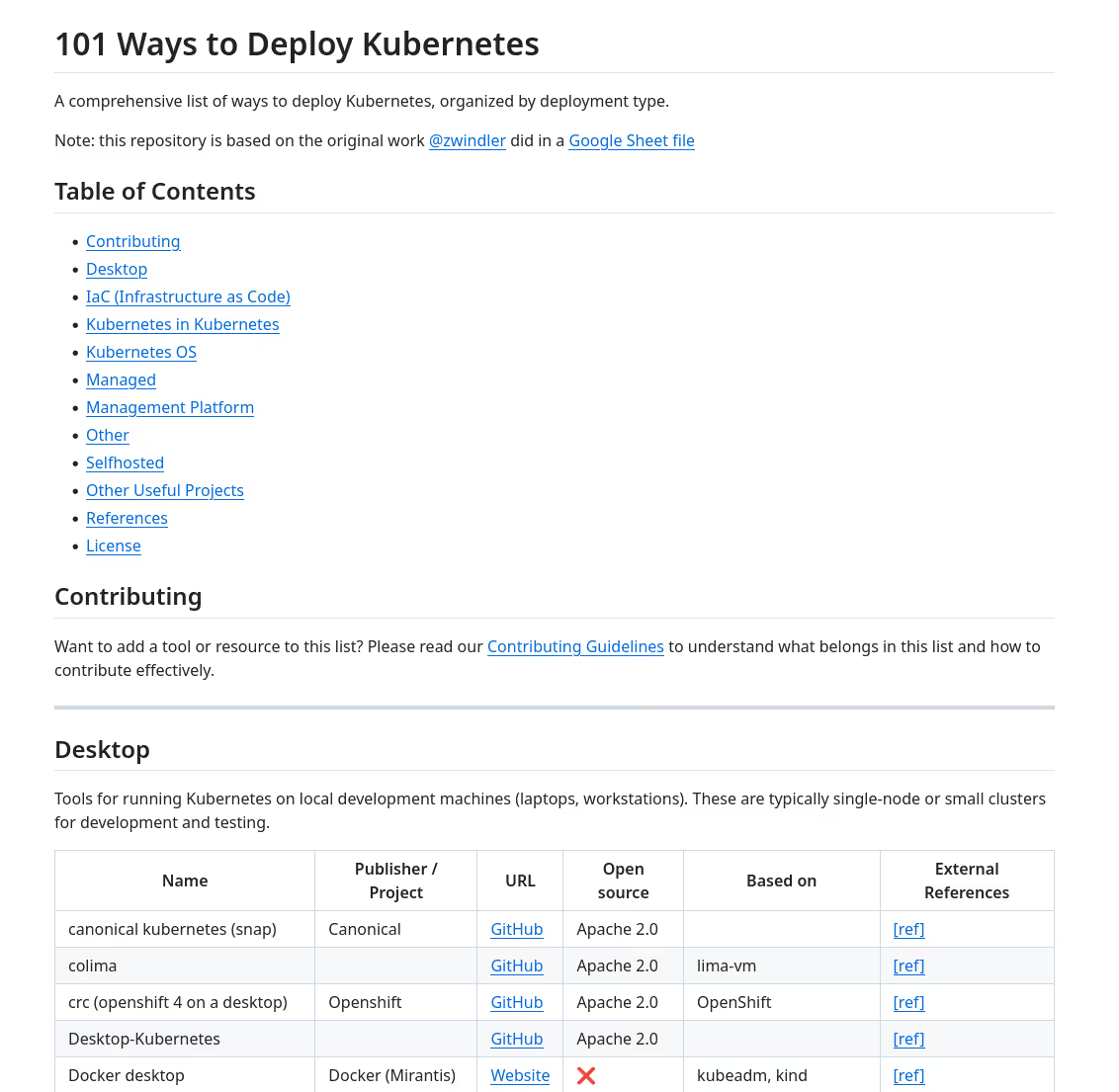
Why on a git repository rather than on a Google Sheet like at the beginning? Because it allows me to easily make this project truly collaborative, especially through PRs (and more importantly their validation or not).
Google Sheets was fine to start with, when it was a personal tool to help me write my book, but for collaboration, it wasn’t viable.
What’s new in this v2?
Easier contributions
The project now has a CONTRIBUTING.md that explains how to participate.
Do you know a solution that’s not listed? Did you spot an error? A broken link? Just submit a Pull Request!
Many new methods (I haven’t counted but probably a dozen)
The project has grown from 93 to over 100 methods! I’ve continued my explorations and added a dozen new solutions, some of which you suggested to me.
License information
I’ve enriched the table with license details for each project. This is particularly important to quickly identify whether a product is truly open source or if it’s a proprietary or commercial license solution.
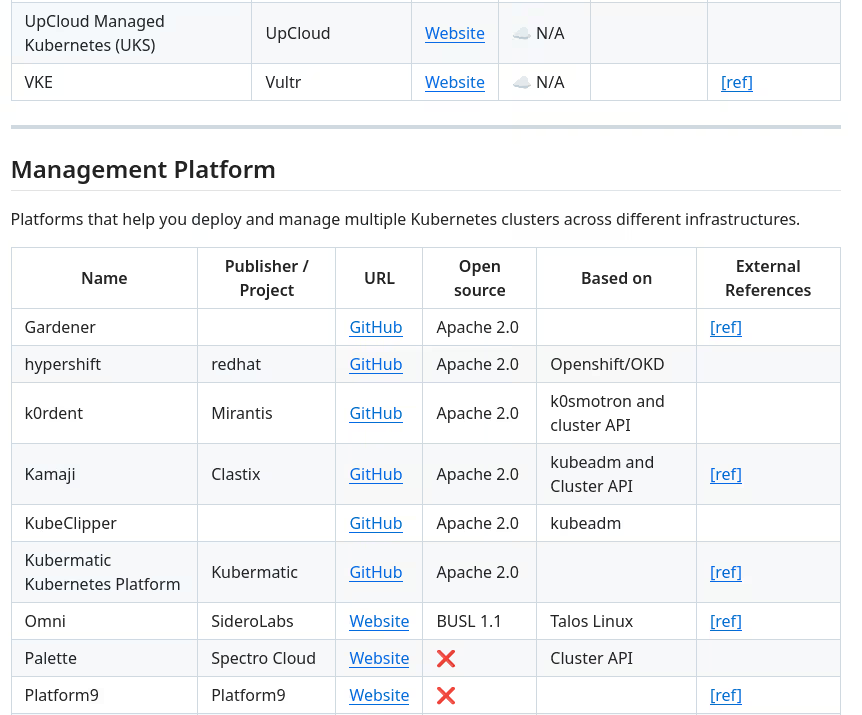
I had this debate with Ludovic actually, who wanted to understand why I hadn’t listed “MKE (Mirantis Kubernetes Engine)”. I had responded at the time that it was because I couldn’t access a trial version as a “random from the Internet” without going through a salesperson, but the argument wasn’t very solid.
To find a “unique” rule to indicate in the CONTRIBUTING.md, I therefore reintegrated some of the solutions I had “censored”.
While the heart of the cloud native ecosystem is open source, both open source and closed source (proprietary) tools are accepted in this list. What matters is whether the tool helps deploy Kubernetes clusters, not its licensing model.
Numerous external references
I did significant work on the “external references” section. The idea of the repo, beyond just providing a laundry list, is to reference third-party articles showing how to set up these solutions and benefit from the community’s feedback.
With the idea of making the project more international (it will be just as useful to English speakers as to the little frenchies in my community), I prioritized English links for as many solutions as possible on this list. There are still some without them, but it’s progressing.
Important note: beyond the official documentation (which exists very often for the vast majority of projects), I wanted to catalog:
- Quality community tutorials
- Detailed blog articles
- Concrete feedback and experience reports
A project still under CC BY-SA 4.0
The content remains under CC BY-SA 4.0 (Attribution - Share Alike) license.
This means you are free to:
- Share: copy and redistribute the content
- Adapt: remix, transform, and build upon the material
Under the following conditions:
- Attribution: you must credit the project
- Share Alike: if you adapt the content, you must distribute it under the same license
How to contribute?
It’s simple:
- Fork the 101-ways-to-deploy-kubernetes repository
- Add or modify the content (following the table format)
- Submit a Pull Request
Read the CONTRIBUTING.md for more details on the process and best practices.
All contributions are welcome: new entries, corrections, enhancements, suggestions…
What’s next?
The project will continue to evolve with new discoveries and your contributions.
I’m also continuing to explore new solutions and enrich existing information. And who knows, maybe we’ll exceed 150 methods by the end of the year? 😄
This is the moment where I play influencer and ask you not to hesitate to:
- Star the project on Github if you find it useful ⭐⭐⭐
- Contribute by adding your discoveries
- Share around you if you find it useful
See you at github.com/zwindler/101-ways-to-deploy-kubernetes!